

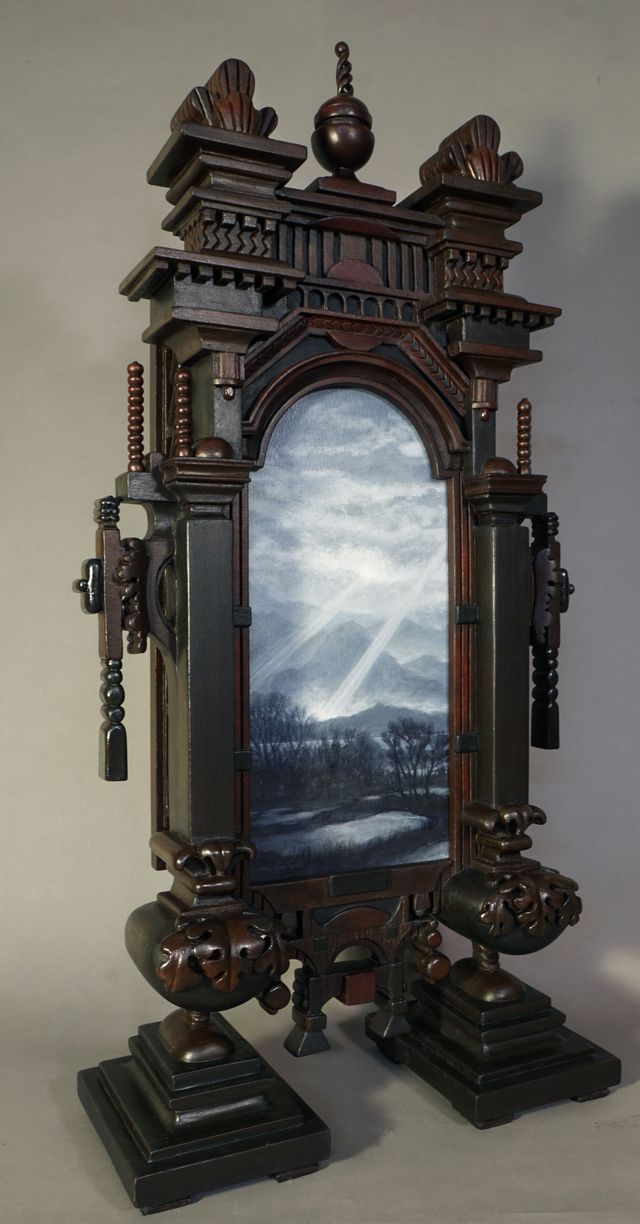
“High Country” by Holly Lane
This year’s entrants for the Women Artist category of the Sheridan Art Prize were universally of a very high caliber; artistry, technical skills with materials, both traditional and non-, and deep empathy for subject matter were typical of all the works in this category. The standout works embody universal truths about the lived experience of womanhood. They do so through materials and processes that have historically been coded as “feminine”, through female subjectivity, and through symbolically charged subject matter – such as the natural world – traditionally associated with femininity. The works situate themselves within broader cultural and historical frameworks that have shaped how femininity is constructed, valued, and represented. Rather than proposing a singular or universal definition of womanhood, the works acknowledge femininity as a complex, socially mediated, and embodied experience, shaped by both personal subjectivity and collective memory.
The winning entrant, “High Country” by Holly Lane is almost an altar piece to the sacred feminine. In the central painting, the light shines down from the heavens, illuminating a body of water just behind a hill. The baroque, hand-made frame transforms the painting into a power object, sanctifying the subject and the artist’s hand that created the work.
Several of the works utilize materials and techniques associated with “women’s work”, such as fabric, quilting, embroidery and fiber arts to address the bodily experience of womanhood. “Mending Light” by Holly Lane, is an installation that uses traditional quilting and mending techniques to create a space for memory and loss. Laura Kamian McDermott’s “Shelter-in-Place Self-Portrait with Wallpaper” uses traditional techniques to create a tapestry that embodies the grief of loss of the world during COVID-19 and represents an artificially cheery indoor space. The complex and contradictory feelings embodied in both of these works is woven into the very fabrics they are made from.
These pieces all reflected something about the essential experience of being a woman for me, as a juror. They either engaged in materials or processes of making that are gendered feminine, engaged with women’s lived experiences, or reflected subject that is frequently associated with femininity.